



Payload vs. Towing Capacity: The Difference (And Why It Matters for SUVs)
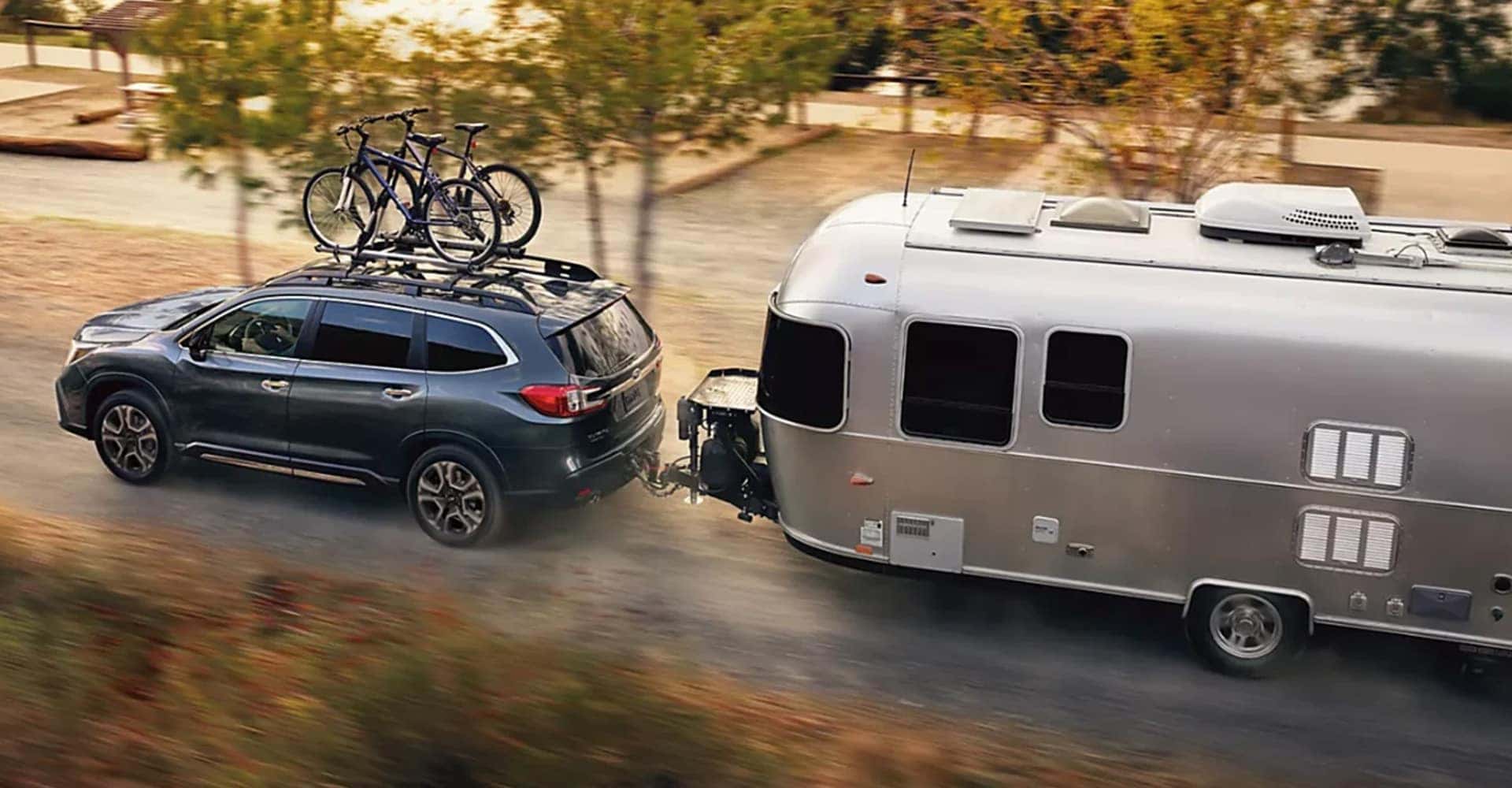
A lot of SUV shoppers check the towing capacity, confirm it covers their boat or trailer, and stop there. That’s only half the equation. Payload capacity, a separate number entirely, determines how much you can actually load into the vehicle itself, and it’s easy to exceed without realizing it, especially with a full family and gear packed for a weekend up Highway 17 or a camping trip toward Big Basin. Here’s what payload actually means, how it’s different from towing, and why both numbers matter together, not just whichever one you happened to check first.
What Is Payload Capacity?
Payload capacity is the maximum combined weight of everything you put inside or on top of the vehicle: passengers, cargo, and anything strapped to a roof rack. It comes from two numbers working together. Gross Vehicle Weight Rating, or GVWR, is the absolute maximum your fully loaded vehicle is engineered to weigh, including the vehicle itself, everyone in it, and everything it’s carrying.
Subtract the vehicle’s curb weight, meaning the empty vehicle with a full tank of gas but no passengers or cargo, and what’s left is your payload capacity. A 2025 Subaru Outback Limited, for example, carries a GVWR of 4,850 lbs and a maximum payload of 900 lbs. That 900 lbs has to cover everyone in the car, everything in the cargo area, and anything on the roof, all at once, not any one of those categories on its own.
What Is Towing Capacity?
Towing capacity is a completely different number: the maximum weight the vehicle can safely pull behind it on a trailer hitch. It has nothing to do with what’s loaded inside the vehicle itself. This is the spec most shoppers check first when they’re planning to tow a boat, camper, or trailer, and it’s the one Subaru markets most visibly by model and trim. Many manufacturers also require trailer brakes once a trailer’s weight crosses a certain threshold, so towing capacity often comes with its own set of equipment requirements beyond just the number on the spec sheet.
Why Confusing the Two Can Overload Your SUV
Here’s where it gets easy to get wrong: a loaded trailer’s tongue weight, typically 10 to 15 percent of the trailer’s total weight, doesn’t count against towing capacity. It counts against payload. So picture a family of five headed out for a camping weekend: passengers alone can easily add up to 700 or 800 lbs, before a single cooler, tent, or duffel bag goes in the back.
Add a loaded roof box and the tongue weight from a small camping trailer pressing down on the hitch, and that Outback’s 900-lb payload ceiling can get tight fast, even while the trailer itself stays comfortably under the towing capacity limit. Being under one number doesn’t mean you’re under both, and payload is the one that gets overlooked.
Ready to find the SUV that actually fits your load, not just your trailer?
How to Find Your Actual Payload Rating
Every vehicle has its specific payload rating printed on a yellow tire and loading information placard, usually located on the driver’s side door jamb. It lists the vehicle’s exact GVWR and maximum occupant and cargo weight for that specific configuration, which can vary from the advertised figure depending on options and trim. This is the number to check before a heavily loaded trip, not a general spec sheet, since two trims of the same model can carry meaningfully different payload ratings.
A Common Misconception: Bigger Doesn’t Always Mean More Payload
It’s tempting to assume a larger SUV automatically has more payload capacity than a smaller one, but that’s not guaranteed. Payload depends on suspension tuning, frame construction, and how the manufacturer balances ride comfort against capacity, not just overall vehicle size. That’s exactly why it’s worth checking the specific number for your configuration rather than assuming size tells the whole story.
Which One Matters More for Your Drive?
- If you’re hauling a trailer, boat, or camper, you need to watch payload and towing capacity together, not just towing capacity alone.
- If you’re not towing anything, payload is your real ceiling: passengers, gear, roof cargo, all of it.
Towing capacity and payload both vary by model and trim across the Subaru lineup. For exact towing figures, see our breakdowns on the Subaru Forester, Subaru Outback, and Subaru Ascent, or the Subaru Wilderness lineup if you need extra capability for rougher terrain.
Get the Real Numbers for Your SUV at Santa Cruz Subaru
Payload and towing figures vary by trim and configuration, and specs on a page only tell part of the story. Our team at Santa Cruz Subaru can pull the actual tire and loading placard numbers for any Forester, Outback, or Ascent on our lot and walk you through exactly what it can carry and pull before you commit to anything.
0 comment(s) so far on Payload vs. Towing Capacity: The Difference (And Why It Matters for SUVs)